-
Naomi Klein: This Changes Everything - Capitalism vs. The Climate
In her provocative book, This Changes Everything, Naomi Klein argues that carbon is not the ultimate cause of climate change; the real enemy is capitalism. She provides a far-reaching explanation of why the climate crisis challenges us to abandon the core “free market” ideology of our time, restructure the global economy, and remake our political systems. Who benefits from the status quo? How deeply are the current power structures embedded in our political economy? How difficult will it be change them?Partner:Cambridge Forum -
Immigrant Struggles, Immigrant Gifts
In the summer of 2014, more than 50,000 children crossing the southern border of the United States brought U.S. immigration policy into sharp relief. Are current policies adequate for today's immigrant experience? By examining the immigrant experience of various ethnic and religious groups throughout U.S. history, the Immigrant Learning Center’s book _Immigrant Struggles, Immigrant Gifts_ demonstrates that the same patterns of native resistance, immigrant struggles and contributions have occurred over and over again. Diane Portnoy of the Immigrant Learning Center leads a panel, including historian Deborah Dash Moore, Constitutional scholar William G. Ross; and Alex Nowrasteh of the Cato Institute, in an exploration of the larger political, historical, sociological and legal context surrounding today’s immigration debate.Partner:GBH Forum Network -
George Kalogeris: Read Us Some More Seferi
Greeks Speak Lecture Series: "Read Us Some More Seferi," a talk on George Seferis, one of the most important Greek poets of the twentieth century and Nobel laureate, by **George Kalogeris**, poet and professor of English Literature and Classics in Translation at Suffolk University. A highlight beginning at 37:45 of the YouTube video: as an interlude amid Kalogeris’ recitation and analysis, native speaker Maria Zervos recites the original Greek text of Seferis’ Argonauts.Partner:GBH Forum Network -
Carbon Tax to Combat Climate Change
The notion of a carbon tax as the most efficient way to combat greenhouse gas emissions was first proposed by MIT professor David G. Wilson in 1973 and was greeted with silence. James Hansen proposed the idea again 30 years later and was greeted with skepticism. Now Massachusetts has taken up the idea. A panel including Massachusetts State Senator Mike Barrett, co-sponsor of a bill proposing the nation’s first carbon tax, physicist and activist Dr. Gary Rucinski, and Anne Kelly, director of public policy at CERES, discusses using a carbon tax to combat global warming and create a sustainable economic future. How would a carbon tax work? What impact would it have on jobs and the economy? What hurdles would it have to clear to be adopted?Partner:GBH Forum Network -

Ticked Off: Making Sense of the Lyme Disease Controversy
What are the Lyme disease wars? Can you know for sure if you are infected? Join WGBH science reporter **Dr. Heather Goldstone** and a panel of experts to take a closer look at the growing public health threat and learn how to stay safe from the tiny, disease-carrying parasites. This discussion was presented by WGBH News and the New England Center for Investigative Reporting at the WGBH studios in Brighton, MA. Photo: "[Ixodes scapularis](https://commons.wikimedia.org/wiki/File:Ixodes_scapularis.jpg#/media/File:Ixodes_scapularis.jpg "")Partner:WGBH -
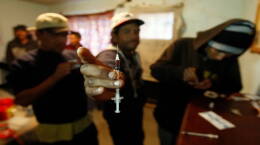
The New Heroin Epidemic
From Rolling Stone to The Christian Science Monitor; WKYC Cleveland to CWRU’s Observer, reports tell us that heroin has become more common and a major killer. Cory Monteith and Philip Seymour Hoffman are highly publicized, “sentinel” cases. But overdoses killed 195 people in Cuyahoga County in 2013 – up from 40 in 2007, and more than the deaths from homicide or vehicle accidents. Heroin use is both personal and social. Lee Hoffer, Associate Professor of Anthropology, studies the social world of illicit drug use. Among his works is _Junkie Business: The Evolution and Operation of a Heroin Dealing Network_. Associate Professor of English Michael Clune’s searing memoir of his own addiction, _White Out: The Secret Life of Heroin_, was chosen as one of the best books of 2013 by The New Yorker and NPR’s On Point. Join them for a broad discussion of the puzzles and issues raised by heroin’s presence in modern life.Partner:Case Western Reserve University -
Paul Greenberg: The Fight for Local Seafood
_New York Times_ bestselling author **Paul Greenberg** is back with his latest book, _American Catch: The Fight for Our Local Seafood_. Greenberg explores the idea that Americans need to repair their relationship with local seafood. As more of us become health-conscious and realize the benefits of eating fish, we also need to support local fishing and ensure the protection of these natural resources. From Alaska's salmon in Bristol Bay, to New York City’s oysters, learn more about how you can protect the ocean with the choices you make in the grocery store. As an added bonus, Greenberg was joined by local fish supplier Mac’s Seafood for a conversation about how consumers can support their local seafood better. Located on Cape Cod since 1995, Mac’s Seafood is a family business that has been buying local seafood since the very beginning. Why? Because they knew there was nothing better out there.Partner:GBH Forum Network -
David F. Wood: The Best Workman in the Shop - William Monroe of Concord, Massachusetts
In June, 1800, 21 year-old cabinetmaker William Munroe arrived in Concord with a set of tools and $3.40 in cash. Forty years later he proudly recorded having more than $20,000 in assets, a remarkable achievement for a craftsman. Concord Museum Curator David F. Wood describes how, influenced by fashion and international politics and motivated by self-esteem and good food, William Munroe steered a path through the treacherous economic landscape of Federal New England and along the way helped make some of the most beautiful clocks the new nation ever produced.Partner:GBH Forum Network -

Executive Overreach: The President On His Own?
Professor James Pfiffner of George Mason University discusses the historical, political, and constitutional evolution of presidential power in America. From sweeping internal surveillance to aggressive drone strikes, the actions of the executive bear far-reaching domestic and international consequences. This forum traces the early foundations of the presidency and explores the controversy surrounding its expansion and recent constitutional challenges.Partner:Case Western Reserve University -
George Daughan: 1812 - The Navy's War
The U.S. Navy's superb performance during the War of 1812 forced Great Britain, and indeed all of Europe, to take the fledgling United States more seriously, initiated a fundamental change in the British-American relationship, and enabled America to maintain a robust navy even in peacetime. Daughan details the chronology of the war and many of its central players, including U.S. President James Monroe. The Navy was an unsung contributor to America’s success in the war, and salvaged what was initially a losing battle.Partner:GBH Forum Network