-
Why Do People Deny Climate Change?
George Marshall visited the Harvard Book Store to discuss his book, _Don't Even Think About It: Why Our Brains Are Wired to Ignore Climate Change._ Marshall explains why he believes climate change is "the perfect crime" and why the innate psychology of human beings is inhibiting our ability to understand and accurately confront climate change. Having interviewed leaders in social psychology, Marshall discusses the importance of reframing views of climate change for those who still deny its existence.Partner:Harvard Book Store -

Jazz Chat: Eric Jackson and Kenny Barron
One of the most sought-after pianists of the post-bop era, Kenny Barron has played on literally hundreds of jazz recordings, many being some of the genre’s most iconic and beloved. His unmatched ability to mesmerize audiences with his elegant playing, sensitive melodies and infectious rhythms is what inspired The Los Angeles Times to name him “one of the top jazz pianists in the world” and Jazz Weekly to call him “The most lyrical piano player of our time.” With over 40 recordings as a leader, Barron has received over nine Grammy nominations for his albums, including People Time with Stan Getz, Freefall and Wanton Spirit (a trio with Roy Haynes and Charlie Haden). His CD Canta Brasil linked Barron with Trio de Paz for a stunning collection of original Brazilian jazz, and was named Critics Choice Top Ten CDs of 2003 by Jazziz Magazine. Barron consistently wins the jazz critics’ and readers’ polls, including Downbeat, Jazz Times and Jazziz magazines. In 2005 he was inducted into the American Jazz Hall of Fame and won a MAC Lifetime Achievement Award. He is a six-time recipient of Best Pianist by the Jazz Journalists Association and was a finalist in the prestigious 2001 Jazz Par International Jazz Award. Whether he is playing solo, trio or quintet, Kenny Barron is recognized the world over as a master of performance and composition. JazzChats are informal discussions led by jazz radio hosts and leaders with the artist one hour prior to the concert.Partner:GBH Forum Network -
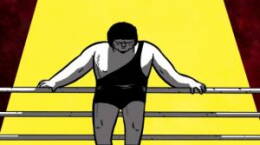
Box Brown: Andre the Giant - Life and Legend
In this stunning biography of André René Roussimoff, better known as André the Giant, cartoonist Box Brown brings the larger-than-life man to human form. He tells of the highs: from his illustrious career in the WWF to his beloved role as Fezzik in The Princess Bride, to his lows: from the daughter he essentially ignored, to his alcohol-fueled rages.Partner:Brookline Booksmith -

Michael Waldman: The Second Amendment - A Biography
At a time of ongoing debate over guns in America, what does the Second Amendment mean to us? Waldman's book looks at history to provide some surprising, illuminating answers.Partner:Harvard Book Store -
Suzanna Danuta Walters: The Tolerance Trap
Harvard Book Store welcomed **Suzanna Danuta Walters**, Director of Women's, Gender, and Sexuality Studies and Professor of Sociology at Northeastern University, for a discussion of her book _The Tolerance Trap: How God, Genes, and Good Intentions are Sabotaging Gay Equality._ From Glee to gay marriage, from lesbian senators to out gay Marines, we have undoubtedly experienced a seismic shift in attitudes about gays in American politics and culture. Our reigning national story is that a new era of rainbow acceptance is at hand. But dig a bit deeper, and this seemingly brave new gay world is disappointing. For all of the undeniable changes, the plea for tolerance has sabotaged the full integration of gays into American life. Same-sex marriage is unrecognized and unpopular in the vast majority of states, hate crimes proliferate, and even in the much vaunted 'gay friendly' world of Hollywood and celebrity culture, precious few stars are openly gay. In The Tolerance Trap, Suzanna Walters takes on received wisdom about gay identities and gay rights, arguing that we are not 'almost there,' but on the contrary have settled for a watered-down goal of tolerance and acceptance rather than a robust claim to full civil rights. After all, we tolerate unpleasant realities: medicine with strong side effects, a long commute, an annoying relative. Drawing on a vast array of sources and sharing her own personal journey, Walters shows how the low bar of tolerance demeans rather than ennobles both gays and straights alike. Her fascinating examination covers the gains in political inclusion and the persistence of anti-gay laws, the easy-out sexual freedom of queer youth and the suicides and murders of those in decidedly intolerant environments. She challenges both 'born that way' storylines that root civil rights in biology, and 'god made me that way' arguments that similarly situate sexuality as innate and impervious to decisions we make to shape it.Partner:Harvard Book Store -
Jack Devine: Good Hunting - An American Spymaster's Story
Harvard Book Store welcomed CIA veteran Jack Devine and bestselling novelist Joseph Finder for a discussion of Devine's book Good Hunting: An American Spymaster's Story. Jack Devine ran Charlie Wilson's War in Afghanistan. It was the largest covert action of the Cold War, and it was Devine who put the brand-new Stinger missile into the hands of the mujahideen during their war with the Soviets, paving the way to a decisive victory against the Russians. He also pushed the CIA's effort to run down the narcotics trafficker Pablo Escobar in Colombia. He tried to warn the director of central intelligence, George Tenet, that there was a bullet coming from Iraq with his name on it. He was in Chile when Allende fell, and he had too much to do with Iran-Contra for his own taste, though he tried to stop it. And he tangled with Rick Ames, the KGB spy inside the CIA, and hunted Robert Hanssen, the mole in the FBI. Good Hunting: An American Spymaster's Story is the memoir of Devine's time in the Central Intelligence Agency, where he served for more than thirty years, rising to become the acting deputy director of operations, responsible for all of the CIA's spying operations. This is a story of intrigue and high-stakes maneuvering, all the more gripping when the fate of our geopolitical order hangs in the balance. But this book also sounds a warning to our nation's decision makers: covert operations, not costly and devastating full-scale interventions, are the best safeguard of America's interests worldwide. Part memoir, part historical redress, Good Hunting debunks outright some of the myths surrounding the Agency and cautions against its misuses. Beneath the exotic allure'living abroad with his wife and six children, running operations in seven countries, and serving successive presidents from Nixon to Clinton'this is a realist, gimlet-eyed account of the Agency. Now, as Devine sees it, the CIA is trapped within a larger bureaucracy, losing swaths of turf to the military, and, most ominous of all, is becoming overly weighted toward paramilitary operations after a decade of war. Its capacity to do what it does best'spying and covert action'has been seriously degraded. Good Hunting sheds light on some of the CIA's deepest secrets and spans an illustrious tenure'and never before has an acting deputy director of operations come forth with such an account. With the historical acumen of Steve Coll's Ghost Wars and gripping scenarios that evoke the novels of John le Carré even as they hew closely to the facts on the ground, Devine offers a master class in spycraft.Partner:Harvard Book Store -

Conflicting Science on the Safety of Genetically Modified Food
Rarely has there been a time when food has divided society into two major warring camps. But that is the situation regarding genetically modified food (aka genetically modified organisms or GMOs). One camp proclaims that genetically modified crops represent the future of food. The other camp believes it is a corporate conspiracy that will contaminate and endanger the world's food supply. Can science bring us closer to the truth about GMOs?Partner:Science for the Public -
Linda Hill and Emily Truelove: Collective Genius - The Art and Practice of Leading Innovation
Harvard Book Store welcomed Professor of Business Administration at Harvard Business School Linda Hill and MIT Sloan School of Management researcher Emily Truelove for a discussion of their book Collective Genius: The Art and Practice of Leading Innovation. You might think the key to innovation is attracting exceptional creative talent. Or making the right investments. Or breaking down organizational silos. All of these things may help'but there's only one way to ensure sustained innovation: you need to lead it'and with a special kind of leadership. Collective Genius shows you how. Preeminent leadership scholar Linda Hill, along with former Pixar tech wizard Greg Brandeau, MIT researcher Emily Truelove, and Being the Boss coauthor Kent Lineback, found among leaders a widely shared, and mistaken, assumption: that a 'good' leader in all other respects would also be an effective leader of innovation. The truth is, leading innovation takes a distinctive kind of leadership, one that unleashes and harnesses the 'collective genius' of the people in the organization.Partner:Harvard Book Store -
Laurence Tribe: Uncertain Justice - The Roberts Court and the Constitution
From Citizens United to its momentous rulings regarding Obamacare and gay marriage, the Supreme Court under Chief Justice John Roberts has profoundly affected American life. Yet the court remains a mysterious institution, and the motivations of the nine men and women who serve for life are often obscure. Harvard University Constitutional law professor Laurence Tribe shows the surprising extent to which the Roberts Court is revising the meaning of our Constitution in his book Uncertain Justice: The Roberts Court and the Constitution, co-authored by Joshua Matz. Filled with original insights and compelling human stories, _Uncertain Justice_ illuminates the most colorful story of how the Supreme Court and the Constitution frame the way we live.Partner:Harvard Book Store -
Leonora Bittleston: Investigating Symbiosis in Carnivorous Pitcher Plants
The idea of a plant eating an animal is very strange. Scientists were ridiculed when they originally suggested plants could be carnivorous. But now we know that carnivory has actually evolved multiple times in plants, in a pattern called convergent evolution. Bittleston's lecture discussed how pitcher plants are perfect examples of this, as their particular form has evolved three separate times in different parts of the world. Some creatures are food for pitcher plants, yet others can't survive without them. Bittleston talked about the communities of insects and bacteria that live happily inside pitcher plants' deadly pools of water. At the end of the lecture, Bittleston discussed new technology and theory used to study the communities within pitcher plants.Partner:Science in the News