-
What Happened to the Honeybees?
Dr. Lu's study of the massive loss of honeybees over the last decade (Colony Collapse Disorder) established a clear link between CCD and a neonicotinoid insecticide found in the fructose that is fed to honeybees. He has worked to make the public aware of the dangers of this group of insecticides, which are used in GMOs, agriculture. gardens/lawns, and for general insect control. In this video he also discusses the difficulties scientists encounter when they attempt to do the necessary research on this subject.Partner:Science for the Public -
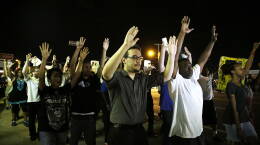
Discussion: We Still Have a Dream to End Racism
In light of increasingly intense, racially charged events in Ferguson, Mo., and elsewhere across the country, Trinity Church in the City of Boston is elevating race relations as a point for public discussion. To spotlight what Trinity Church’s Rector, the Rev. Samuel T. Lloyd, calls “the urgent issue of our time,” Trinity is sponsoring the inaugural Anne B. Bonnyman Symposium – “We Still Have a Dream: End Racism” – on Sun., Jan. 18, 2015. Free and open to the public, the symposium will be held at Trinity Church, Copley Square. Moderator: The Honorable **Barbara Dortch-Okara**Partner:Trinity Church -

Marian Wright Edleman: We Still Have a Dream to End Racism
**Marian Wright Edleman** delivers the keynote address for the first symposium organized by Trinity Church, convening people across the city to come together to learn, be inspired, and be moved to take effective actions towards facing, healing and ending racism. The symposium was organized by members of the Trinity Anti-Racism Team, as part of the recognition of the Dr. Martin Luther King, Jr. for his commitment to a better America. The The Reverend Samuel T. Lloyd III, Rector of Trinity Church, introduces the symposium saying, "With the recent events in Ferguson, Cleveland, New York, and in our own backyard, this discussion sadly is more urgent than we had imagined. We pray that the day’s conversations will speak powerfully to participants coming from many different perspectives, and that it will inform and inspire effective new initiatives in the long journey we walk on together towards truth and reconciliation."Partner:Trinity Church -

How to Build a Large Scale Data Visualization
Large publishers like the New York Times, the Washington Post, and Bloomberg are creating impressive visualizations with teams of designers and developers. Recreating a similar project might seem out of reach for the non-professional; however many of the tools used to build visualizations are open source and freely available. With a good understanding of visual design anyone can apply the same techniques and come up with a great data visualization. Discover how well-crafted data visualizations can make a powerful impact in your professional work and learn the skills necessary to share your insights through compelling visualizations. **Mike Barry** and **Brian Card** shared their insights, experiences, and best practices for working with data visualizations. Here's an example: [**Visualizing MBTA Data**](http://mbtaviz.github.io/ "Visualizing MBTA Data") Presented at Simmons College Main College in Boston, MA. (Jan. 2015)Partner:New England Chapter of the Association for Information Science & Technology -

The Lonely War: One Woman’s Account of the Struggle for Modern Iran
In the summer of 2009, as she was covering the popular uprisings in Tehran for the New York Times, Nazila Fathi received a phone call. “They have given your photo to snipers,” a government source warned her. Soon after, with undercover agents closing in, Fathi fled the country with her husband and two children, beginning a life of exile. In _The Lonely War_, Fathi interweaves her story with that of the country she left behind, showing how Iran is locked in a battle between hardliners and reformers that dates back to the country’s 1979 revolution. Drawing on over two decades of reporting and extensive interviews with both ordinary Iranians and high-level officials before and since her departure, Fathi describes Iran’s awakening alongside her own, revealing how moderates are steadily retaking the country.Partner:Harvard Book Store -

Twisted Strands: Ropemaking in the Charlestown Navy Yard
Learn from an expert about some of the many ways that rope making connects with Boston history! Hear about how ropemaking was important to Boston sailors, learn about the Ropewalk Riots – which occurred a few days before the Boston Massacre. Boston National Historical Park Ranger **Dan Gagnon** leads the event and demonstrates several rope-tying techniques.Partner:Revolutionary Spaces -

Jason Sokol: All Eyes Are Upon Us
The Northeastern United States is home to abolitionism and was a refuge for blacks fleeing the Jim Crow South. The region has enjoyed a long and celebrated history of racial equality and political liberalism and, after World War II, appeared poised to continue this legacy, electing black politicians and rallying behind black athletes and cultural leaders. However, as historian **Jason Sokol** reveals in _All Eyes Are Upon Us_, these achievements obscured the harsh reality of a region riven by segregation and deep-seated racism.Partner:Brookline Booksmith -
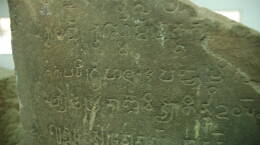
Amir Aczel Reads from Finding Zero
Mathematician, author and lecturer **Amir Aczel** reads from his new book, _Finding Zero: A Mathematician's Odyssey To Uncover The Origins Of Numbers,_ the result of Aczel's relentless obsession to find the origins of numerals. Travel with him through history, examining glyphs of early Babylonian, Hindu, Arabic and finally Roman, ultimately leading him into the jungles of the far East. There he finds the earliest zero—the keystone of our entire system of numbers—on a crumbling, vine-covered wall of a seventh-century temple. (Photo: Debra Aczel) >> Hear Aczel's interview with Eric Westervelt on [NPR’s Weekend Edition.](http://www.npr.org/2015/01/03/374737120/the-zig-zagging-history-of-the-number-zero "Weekend Edition")Partner:Brookline Booksmith -
Coastal Ecosystems and Climate Change
The vitality of coastal ecosystems is of critical importance to life on Earth. Professor Brian Helmuth's lab carries out very complex investigations of these ecosystems. He discusses this fascinating area of science, his role in the international effort to sustain the coastal ecosystems, and how this work is used by policy makers.Partner:Science for the Public -

Ebenezer Mackintosh, the Gangs of Boston, and Riot in the New World
Learn how Boston’s 18th-century gangs contributed to the city's well-organized riots and mob actions, from the Stamp Act Riots to the Boston Tea Party. Historian **Matthew Wilding** focuses on the life of well-known radical Patriot Ebenezer Mackintosh as he explores the theme of riot as political expression in colonial Boston.Partner:Revolutionary Spaces