What matters to you.
0:00
0:00
NEXT UP:
 
Top

Forum Network

Free online lectures: Explore a world of ideas

Funding provided by:
CF_Logo_Square.jpeg

Cambridge Forum

Let Cambridge Forum change your mind....

Cambridge Forum hosts free, public discussions that inform and engage, so that people can better explore the varied issues and ideas that shape our changing world. CF broadcasts its live events via podcasts, weekly NPR shows and online presentations via GBH Forum Network on YouTube.

http://www.cambridgeforum.org

  • PEN-New England pays tribute to Howard Zinn's legacy of support for small presses and young writers with a panel discussion featuring writers and editors reflecting on his influence on their careers and their publishing houses. In the 60's Zinn's defiant writing built and extended the anti-war movement from shore to shore. His legacy of anti-establishment books, from the landmark *The People's History of the United States* to his final work, *Three Plays: the Political Theater of Howard Zinn*, he gave voice, credit, and visibility to those most often denied their voice in history, in their communities, in their own lives.
    Partner:
    Cambridge Forum
  • Rev. Mark Morrison-Reed discusses his book, *In Between: Memoir of an Integration Baby*, his memoir of growing up during the era of the civil rights movement. He wrestles with racism, the death of Martin Luther King, black radicalism, his interracial family and his experience as one of the first black Unitarian Universalist ministers. How does his experience let us gauge the impact of racism in our society? How post-racial is America?
    Partner:
    Cambridge Forum
  • Lewis Hyde defends the concept of the "cultural commons." How has our cultural heritage, the store of ideas, art, and inventions we have inherited from the past, come to be seen as "intellectual property?" Have we taken the concept of "ownership" too far?
    Partner:
    Cambridge Forum
  • George McCully, creator of the *Catalogue for Philanthropy* and the new *Massachusetts Philanthropic Directory*, discusses the contemporary transformation of philanthropy. Rooted in the Classical tradition of “humane-ness,” philanthropy provided the explicit rationale for the founding of the United States. How is the practice of philanthropy changing today? What role have electronic technologies and the new demographics of wealth played in the philanthropic revolution?
    Partner:
    Cambridge Forum
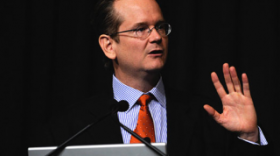
  • Harvard Law professor Lawrence Lessig argues that American democracy is broken and that only a concerted effort to change the way that Congress operates can restore our system of government. What changes does he see as necessary? And how does he see those changes coming about?
    Partner:
    Cambridge Forum
  • In his book *Deadly Spin*, Wendell Potter takes readers behind the scenes to show how a huge chunk of our healthcare spending actually bankrolls a propaganda campaign and lobbying effort focused on protecting one thing: profits. Whatever the fate of the current health care legislation, it makes no attempt to change that fundamental problem. Relentless PR assaults play an insidious role in our political process anywhere that corporate profits are at stake--from climate change to defense policy. *Deadly Spin* tells us why--and how--we must fight back.
    Partner:
    Cambridge Forum
  • Constitutional scholar Sanford Levinson discusses how the Constitution limits democratic self-government. Most citizens see voting in elections as a major duty of citizenship. Political parties and the media focus almost exclusively on elections as the source of the nation’s governing “mandate.” Why, then, don’t elections make more difference in the policies and activities of our government?
    Partner:
    Cambridge Forum
  • Actress Maeve Kincaid and American Repertory Theatre artistic director Diane Paulus examine the four imaginations--of playwright, actor, director, and audience--that work together to create a theatrical space that feels "real," but actually does not exist outside the theatre.
    Partner:
    Cambridge Forum
  • In *Empire of Illusion*, Chris Hedges argues that we now live in two societies: one, the minority, functions in a print-based, literate world, that can cope with complexity and can separate illusion from truth. The other, a growing majority, is retreating from a reality-based world into one of false certainty and magic. In this "other society," serious film and theatre, as well as newspapers and books, are being pushed to the margins. In the tradition of Christopher Lasch's *The Culture of Narcissism* and Neil Postman's *Amusing Ourselves to Death*, Hedges navigates this culture--attending WWF contests as well as Ivy League graduation ceremonies--exposing an age of terrifying decline and heightened self-delusion.
    Partner:
    Cambridge Forum
  • The December 2009 Copenhagen talks on global climate change failed to produce a new international accord, and environmental scientist James Hansen is not wasting time bemoaning that failure. Rather he looks on it as opportunity to renew and expand the discussion of climate change and look for new ideas that will lead to real solutions to this global problem. What might the road forward look like? Where should scientists turn their attention "After Copenhagen?" What should citizens be doing? This talk is part of Cambridge Forum's After Copenhagen: Global Climate Change Conference, recorded by Steve MacAusland.
    Partner:
    Cambridge Forum