-

Bass Guitarist Stanley Sheldon on the Roots of Caribbean Music
Stanley Sheldon is an American bass guitar player best known for his work with Peter Frampton and notable as an early adopter of the fretless bass for rock music. Upon returning to school, Sheldon took an interest in the roots of Caribbean music. He devoted most of the '90s to Latin American Studies at the University of Kansas, earning a master's degree. Afro-Caribbean music and dance evolved not only in and around colonial sugar plantations but also in more remote mountainous regions of the islands of Hispaniola, Cuba, Puerto Rico, and Jamaica, in maroon outposts of escaped slaves. Today, musicians in many large cities such as New York and Miami continue the musical tradition that stems from a slave/maroon past. Throughout colonial Caribbean America the Atlantic slave trade gave rise to flourishing societies made up of escaped slaves who had fled the harsh conditions endured in the sugar plantations. A strong correlation between regionally specific intensive sugar production and Afro-Caribbean art can be observed in all the major regions where the slaves were brought to work. Cimarron culture is regarded as a “culture of the drum,” bearing a striking resemblance to the aboriginal African rhythms but nonetheless uniquely Afro-American. Afro-Caribbean music is not only important as an integrating, democratic force, it also at times displays a voice’ challenging and defying hegemony. Photocredit: Flickr/ DJ from De Lagelanden (CC)Partner:Ford Hall Forum -

The Two Koreas
The Korean Peninsula is facing a defining era. Attempts by South Korean President Moon Jae-in and former U.S. President Donald Trump to repair the rift between North and South lost any momentum as Pyongyang continued to test long-range missiles for its nuclear weapons program. As the rift between the U.S. and China grows further, South Korea may end up in the middle of the two superpowers. What does the future hold for the U.S. relationship with the Republic of Korea?Partner:WorldBoston -

Inside the Outbreaks—A Look Inside the Epidemic Intelligence Service
Emmy Award-winning medical journalist and CNN analyst Dr. Seema Yasmin joins BPL President David Leonard to discuss what happens at the epicenter of an epidemic. How do disease detectives track down patient zero, find the source of contagion, and stop the spread of disease? As an officer in the Epidemic Intelligence Service, Dr. Yasmin was tasked with hunting diseases and chasing epidemics. Inside prisons, across border towns, and within the walls of hospitals and workplaces, she traced microbes and worked to protect communities. Pulling back the curtain on the inner workings of epidemic investigations, Dr. Yasmin tells stories from the front lines of global public health to demonstrate how humans are increasingly connected and epidemics may become the new normal. This talk is part of both the Lowell Lecture Series, sponsored by the Lowell Institute, and part of the Repairing America Initiative, the Boston Public Library's pledge to focus its 2021 programming and services on bridging the gaps that divide America. By prioritizing economic recovery, civic engagement, COVID-19 recovery, racial equity, workforce development, and youth engagement, the BPL is working to help Americans rise above the challenges they face. Image: Boston Public LibraryPartner:Boston Public Library -
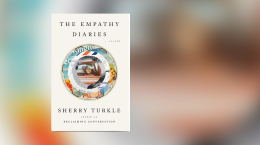
Coming to our Senses: Sherry Turkle on Empathy
Pandemic lockdowns created a slew of emotional challenges for everyone, from toddlers to seniors. Now that our social skills have atrophied, how can be retrain ourselves to interact with each other again? MIT Professor Sherry Turkle aims to help us understand how we might rejuvenate our senses and flex our empathy muscles once again. In her new memoir, "The Empathy Diaries," Turkle unpacks how her family, upbringing, and intellectual development shaped her life’s work. Turkle explores a counterintuitive pattern observed across many decades devoted to keeping people connected: that empathy and connection can arrive when we feel the most alone and unfamiliar. Moderating this conversation is psychologist, Todd Essig Ph.D Check out Turkle's book, "The Empathy Diaries" : https://www.penguinrandomhouse.com/books/585731/the-empathy-diaries-by-sherry-turkle/Partner:Cambridge Forum -

Beyond Borders with Photographer Amira Al-Sharif
In her nearly two-decade-long career as a photojournalist, Yemeni photographer Amira Al-Sharif documented the multi-cultural lives of women, the beauty of ordinary daily life, and now the horror of a long raging and brutal war. Through stunning images of her beloved country of Yemen, Amira bears witness to what has been termed “the worst man-made humanitarian crisis in the world.” In this conversation, Amira talks about her life-long bond with the camera, her work to unveil misconceptions, and struggles to keep documenting lived experiences, while finding glimmers of hope in a place consumed by conflict and suffering. Using the lens of her camera, and unlocking her “bitter-sweet” memories, Amira reveals her artistic mission to rescue “the fleeting, hiding, or missing scenes” from her journey as a war photographer. This is part of an ongoing series by Ford Hall Forum titled, Beyond Borders: Women's Stories and the Art of Bearing Witness. Hear captivating storytellers share their work and bear witness to struggles about human rights, memory, belonging, and love. Image: Amira Al-SharifPartner:Ford Hall Forum -

Fixing what’s broken: America’s Place in the World
Even as President Biden moved swiftly to re-engage allies by rejoining the Paris Climate Accord, addressing the G-7 and Munich Security Conference and announcing plans to host a “Summit for Democracy,” his declaration that “America is back” has been met with cautious optimism at best and even outright skepticism. Our expert panel with Fiona Hill, Brookings Sr. Foreign Affairs fellow, Stephen Wertheim of the Quincy Institute for Responsible Statecraft, Enrique Perret, director of the US Mexico Foundation, and Lyric Thompson of the International Center for Research on Women examine the many challenges, crises and opportunities that the Biden Administration faces in determining America’s role in a rapidly changing world order. ## Resources Learn about [The Coalition for a Feminist Foreign Policy in the United States.](https://www.icrw.org/publications/toward-a-feminist-foreign-policy-in-the-united-states/) To check it out for yourself, here is a link to the [White House’s Gender Policy Council.](https://www.whitehouse.gov/gpc/) You can read Stephen’s article [criticizing Biden's "America is Back" rhetoric](https://www.nytimes.com/2021/02/24/opinion/biden-foreign-policy.html) and commitment to military dominance. You can find Dr. Hill’s first edition of [“Mr. Putin: Operative in the Kremlin."](https://www.brookings.edu/book/mr-putin-new-and-expanded/) Learn more about [Dr. Hill’s biggest takeaways from her time in the White House.](https://www.newyorker.com/magazine/2020/06/29/what-fiona-hill-learned-in-the-white-house) You can read [Enrique Perrett's article about talent and competitiveness.](https://mexicotoday.com/2020/07/16/op-ed-by-enrique-perret-erhard-talent-and-competitiveness/) Here’s a breakdown of [what’s inside Biden’s new $2 trillion infrastructure proposal.](https://www.npr.org/2021/03/31/982908847/biden-set-to-unveil-expansive-2-trillion-infrastructure-plan)Partner:Ford Hall Forum -

The Environmental Benefits of Grass Fed Beef
Grass-fed beef producers in the U.S. have begun a movement to restore soils and stabilize the climate with a fundamentally different approach called regenerative grazing. This method builds on nature’s own system of pulling carbon from the air and storing it in the soil. Sixty million buffalo lived on the Great Plains at one time. The prairie had deep, productive soils, 8 to 10 feet down, thanks to the symbiosis of the large herbivore, plants, photosynthesis and soil microbes. In more recent times, poor farming methods have sent this stored carbon back up into the atmosphere as C02. Current scientific research helps us understand the mechanisms and methods by which grazing can foster carbon sequestration, protect against droughts and floods, and increase crop yields many-fold to feed growing populations. Ridge Shinn founded Big Picture Beef in 2015. Its mission is to establish an environmentally sustainable and economically viable model of producing beef through managed grazing—no feedlots and no grain, ever. His vision is a system that produces healthy animals, healthy food, healthy soils, and fair wages for farmers.Partner:Biodiversity for a Livable Climate -

Transportation Planning for Climate and Health
Transportation now generates more greenhouse gas emissions than any other sector in the United States. It is also a major source of air pollution in our communities, particularly neighborhoods striving for environmental justice, where many low-income residents and people of color live. How can we redesign our transportation system to become healthier for both our bodies and our planet? GBH News transportation reporter Bob Seay and Andre Leroux, currently leading MassINC’s Transformative Transit-Oriented Development program, host a panel with Massachusetts State Senator Joseph A. Boncore, Clean Transportation organizer for the Union of Concerned Scientists Paulina Muratore, and Alternatives for Community & Environment director of transit oriented development, Mela Bush-Miles to discuss the role of urban and transit planning in addressing climate change.Partner:MassINC -

BostonTalks: The Science of Food
Why do we make the choices we make when it comes to food? GBH Curiosity Desk’s Edgar B. Herwick III interviews two experts on the science of food to uncover some of the fascinating and surprising facts that influence our food consumption.Partner:WGBH -

How Experience From the Financial Crisis will Inform a Pandemic Recovery
Journalist and political-financial expert Nomi Prins joins BPL President David Leonard to discuss her years of experience writing about the fallout of the 2007-08 global financial crisis and how it informs the way we will pull ourselves out of economic difficulties created by the pandemic. Looking at the historical developments and underpinnings of international finance, economics and geo-politics, Prins references her latest book, "Collusion: How Central Bankers Rigged the World" and the lasting impact of events from the global financial crisis. She also provides guidance to understand and navigate global financial complexities and dynamics made more difficult by the COVID-19 crisis. [The Repairing America Initiative](https://forum-network.org/series/boston-public-library-repairing-america/) is the Boston Public Library’s pledge to focus its 2021 programming and services on bridging the gaps that divide America. By prioritizing economic recovery, civic engagement, COVID-19 recovery, racial equity, workforce development, and youth engagement, the BPL is working to help Americans rise above the challenges they face. This talk is presented in partnership with the Kirstein Business Library and Innovation Center and sponsored by the Friends of Kirstein. KBLIC invites media creators, innovators, job seekers, entrepreneurs, nonprofits, investors, coders, and makers to its new space. Business-minded individuals can enjoy an inviting and modern space with over 5,000 square feet of printed resources, flexible seating, innovative technology to conduct business research, and dedicated areas for collaborating on projects with colleagues or developing a new career skill. Image: Boston Public LibraryPartner:Boston Public Library