-

Alex Ross: Listen to This
*New Yorker* music critic Alex Ross discusses his second book, *Listen to This*. *Listen to This*, which takes its title from a 2004 essay in which Ross describes his late-blooming discovery of pop music, showcases the best of his writing from more than a decade at* The New Yorker*. These pieces are dedicated to classical and popular artists alike. In a previously unpublished essay, Ross retells hundreds of years of music history--from Renaissance dances to Led Zeppelin--through a few iconic bass lines of celebration and lament. He sketches canonical composers such as Schubert, Verdi, and Brahms; gives us in-depth interviews with modern pop masters such as Bjork and Radiohead; and introduces us to music students at a Newark high school and indie-rock hipsters in Beijing. Whether his subject is Mozart or Bob Dylan, Ross shows how music expresses the full complexity of the human condition.Partner:Harvard Book Store -
Cultural Life: A European-American Dialogue on Public-Private Partnership
William Gilcher of Goethe-Institut Washington moderates a timely discussion about how cultural life should be supported and financed. Rachel Goslins, the Executive Director of the President's Committee on the Arts and the Humanities, and Kristina Hasenpflug, a curator at the Wüstenrot Foundation in Ludwigsburg, Germany, offer their unique perspectives about what Germans and Americans learn from each other about the nature of public-private partnerships in support of a cultural life for all our citizens.Partner:Goethe-Institut Washington -
Faculty Insight: Islam in the West-–A Clash of Civilizations?
Faculty Insight is produced in partnership with Harvard University Extension School and ThoughtCast. This third interview of the series is with Jocelyne Cesari, a level-headed yet astute specialist in contemporary Islamic society. Muslims who live in the Western world today face multiple challenges — suspicion, isolation, ignorance, fear. And post-9/11, of course, they carry the weight of that violent attack. So how are we to move forward, in an enlightened, inclusive manner? How ought we to apply our secular, humanist and individualistic values at such a time? For starters, let’s listen to Jocelyne Cesari. She might not have all the answers, but as the director of the inter-faculty Islam in the West Program, she’s clearly the right person to ask. She is also an associate at the Center for Middle Eastern Studies and the Center for European Studies at Harvard, and teaches in Harvard’s Department of Government, its Divinity School and its Extension School.Partner:ThoughtCast -
The BP Oil Spill and the U.S. Navy's New Energy Revolution
Secretary of the Navy Ray Mabus is working to chart a new course for the Navy and Marine Corps, that by 2020 will dramatically reduce the Navy's consumption of fossil fuels. He also prepared the long-term recovery plan for the Gulf of Mexico in the aftermath of the oil spill.Partner:Carnegie Council for Ethics in International Affairs -

Paul Auster: Sunset Park
Writer Paul Auster reads from his newest book, *Sunset Park*, which follows the hopes and fears of a cast of unforgettable characters brought together by the mysterious Miles Heller during the dark months of the 2008 economic collapse: An enigmatic young man employed as a trash-out worker in southern Florida obsessively photographing thousands of abandoned objects left behind by the evicted families; a group of young people squatting in an apartment in Sunset Park, Brooklyn; The Hospital for Broken Things, which specializes in repairing the artifacts of a vanished world; William Wyler′s 1946 classic *The Best Years of Our Lives*; a celebrated actress preparing to return to Broadway; an independent publisher desperately trying to save his business and his marriage; these are just some of the elements Auster weaves together in this novel about contemporary America and its ghosts.Partner:Harvard Book Store -
An Actor and A Gentleman
Lou Gossett, Jr. is one of the most respected African American stage and screen actors, rising to fame with his Emmy-winning role in the television miniseries Roots and Oscar-winning performance in An Officer and a Gentleman. From his early success on the New York stage appearing with Ruby Dee and Sidney Poitier in A Raisin in the Sun and through most of his long career in Hollywood, he has struggled to get leading roles and fair pay as a black actor. Gossett speaks frankly of his problem with drugs and alcohol that took years to overcome and his current work to eradicate racism and violence and give our children a better future. He is joined by his writer, Phyllis Karas, biographer and professor of journalism.Partner:Ford Hall Forum -
Transgender Life and Rights
Film director Sara Herwig joins Somerville's LGBT Liaison Raffi Freedman-Gurspan for a discussion of the issues faced by transgender people in the United States. The discussion covers religious belief, federal and state laws, and cultural stigmas. The talk followed a screening of [Thy Will Be Done,](https://www.youtube.com/watch?v=4JrcntNqAOM "") a documentary by Alice Dungan Bouvrie that follows male-to-female transsexual Sara Herwig on her path to ordination in the Presbyterian Church. The talk was held in the Somerville Community Access Television studio.Partner:SCA-TV -
Saba Silverman: Stories From the Holocaust
Saba Silverman is the child of holocaust survivors from Lithuania. She tells the history of her parents struggles before, during, and after World War II.Partner:Breman Jewish Heritage Museum -

Good Vibrations: Michael Fitzpatrick and Rabbi Irwin Kula
Musician Michael Fitzpatrick calls out for compassion and world peace with his cello and discusses the power of good vibrations with Rabbi Irwin Kula. This discussion is part of "Bodies on the Line", a 9-day colloquium at New York University, bringing together 9 artists and writers from across genres and around the world to share work, ideas and process. Our subject is borders. There are the real borders, such as the ones that are the focus in debates about immigration policy in this country and around the world. There are also political and ideological borders that divide us. On the one hand, borders limit us, and make us vulnerable. On the other hand we want to look at the possibilities and opportunities at border lines. Bodies on the Line considers the border as a point of energy and creativity in different regions and spheres of life. The symposium is structured around small working groups and some public presentations. Assisted by respondents, expert witnesses, and the collaboration of several universities and cultural organizations, Bodies on the Line Fellows explore each other's artistic representations and investigations of immigration, statelessness, and identity in the contemporary world. The goal of the colloquium is to create new artistic partnerships, to inspire future projects, and to use artistic practice as a way of investigating new and historical ideas. Above all, we seek to bring artists around a table to discuss, in their own unique ways, and with their own unique creative resources, some of the world's most pressing problems.Partner:WNET -
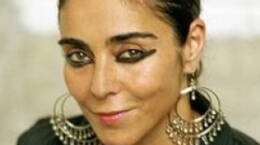
Ethical Art: Shirin Neshat, Carol Becker and Anna Deavere Smith
This discussion is part of "Bodies on the Line", a 9-day colloquium at New York University, bringing together 9 artists and writers from across genres and around the world to share work, ideas and process. Our subject is borders. There are the real borders, such as the ones that are the focus in debates about immigration policy in this country and around the world. There are also political and ideological borders that divide us. On the one hand, borders limit us, and make us vulnerable. On the other hand we want to look at the possibilities and opportunities at border lines. Bodies on the Line considers the border as a point of energy and creativity in different regions and spheres of life. The symposium is structured around small working groups and some public presentations. Assisted by respondents, expert witnesses, and the collaboration of several universities and cultural organizations, Bodies on the Line Fellows explore each other's artistic representations and investigations of immigration, statelessness, and identity in the contemporary world. The goal of the colloquium is to create new artistic partnerships, to inspire future projects, and to use artistic practice as a way of investigating new and historical ideas. Above all, we seek to bring artists around a table to discuss, in their own unique ways, and with their own unique creative resources, some of the world's most pressing problems.Partner:WNET