-

Askia Touré: From Pyramids to Stars
**Askia M. Touré**, an award-winning poet, author, social activist, and African American Studies professor, is a fountain of fascinating oral history about the Student Nonviolent Coordinating Committee (SNCC), civil rights campaigns, the Black Panthers, and the 'Black Arts' movements, of which he is a co-founding architect. A lifelong interest in the history of Africa inspired Touré to use his work to restore the lost heritage of African American people. Along with Sonia Sanchez, Amiri Baraka, and other black writers, Touré helped shape the legacy of the 'Black Arts' Movement and profoundly changed how race, ethnicity, nationality, gender, politics, and art were and are understood. Touré is featured in a host of anthologies, and authored five books, including From the Pyramids to the Projects, From the Projects to the Stars, winner of the 1989 American Book Award for Literature, and Dawnsong!, which received an award from the African-American Literature and Culture Society, an affiliate of the American Literature Association. Touré recently received a Lifetime Achievement Award from Pen Oakland.Partner:Museum of African American History -
The Health of Democracy: Privatizing Education
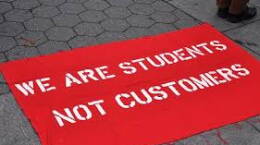
The Massachusetts School Law of 1642 laid out the rationale for public education: “Forasmuch as the good education of children is of singular behoof and benefit to any Common-wealth.” How do contemporary efforts to privatize public education square with the civic role that education has played in American democracy? Internationally recognized leader in education policy **Julian Vasquez Heilig** examines the variety of ways in which public education is being privatized in the name of “reform” and suggests ways for citizens to respond that both improve educational experience and strengthen the societal and civic role that education plays. **Suzie McGlone**, a Boston Public School teacher, responds and moderates. _This program is funded in part by MassHumanities. Co-sponsored by Citizens for Public Schools._Partner:Cambridge Forum -

Designing Boston: The Olympics in 2024
The Designing Boston conversation hosted by the Boston Society of Architects focused on the U.S. Olympic Committee’s decision to back Boston as the host for the 2024 Olympics. As former Boston city councilor Mike Ross said during a recent interview, “[The Big Dig] changed the shape and face of Boston and... the Olympics will do the same thing.” Focusing on the role that architecture has (or has not) played in making previous Olympics successful, Ross moderated the panel discussion and dived into lessons learned by architects and planners with past Olympic experience in such cities as Seoul, Beijing, Sydney, and London. This event launches a series of conversations and debates related to potential roles, responsibilities, and opportunities available to architects, planners, and developers as this huge and exciting undertaking unfolds. The BSA Urban Design Committee co-hosted this event. Image: [Boston à lheure bleue, Emmanuel Huybrechts, Creative Commons License, modified.](http://commons.wikimedia.org/wiki/File:Boston_à_lheure_bleue_(4769294947).jpg "")Partner:Boston Society of Architects/AIA and the BSA Foundation -

Bruce Schneier: Why We Should Reform Surveillance Policies
You are under surveillance right now. Your cell phone provider tracks your location and knows who’s with you. Your online and in-store purchasing patterns are recorded, and reveal if you're unemployed, sick, or pregnant. Your e-mails and texts expose your intimate and casual friends. Google knows what you’re thinking because it saves your private searches. Facebook can determine your sexual orientation without you ever mentioning it. The powers that surveil us do more than simply store this information. Corporations use surveillance to manipulate not only the news articles and advertisements we each see, but also the prices we’re offered. Governments use surveillance to discriminate, censor, chill free speech, and put people in danger worldwide. And both sides share this information with each other or, even worse, lose it to cybercriminals in huge data breaches. Much of this is voluntary: we cooperate with corporate surveillance because it promises us convenience, and we submit to government surveillance because it promises us protection. The result is a mass surveillance society of our own making. But have we given up more than we’ve gained? In _Data and Goliath_, **Bruce Schneier** offers another path, one that values both security and privacy. He shows us exactly what we can do to reform our government surveillance programs and shake up surveillance-based business models, while also providing tips for you to protect your privacy every day. You'll never look at your phone, your computer, your credit cards, or even your car in the same way again. (Photo: [nolifebeforecoffee/Flickr](https://www.flickr.com/photos/nolifebeforecoffee "")) **Of similar interest:** Watch the **Frontline** story on government surveillance and the companies who are compliant in sharing your data. [United States of Secrets.](http://www.pbs.org/wgbh/pages/frontline/united-states-of-secrets/ "Frontline: United States of Secrets")Partner:Harvard Book Store -

Selma at 50 and Ferguson Today
The 2015 Spring Lowell Lecture hosted by BU's School of Theology featured a conversation with two alumni who had participated in marches in Alabama after the events of Bloody Sunday that took place on March 7, 1965. Joining the two alumni was Reverend Dr. Pamela Lightsey, who traveled to Ferguson, Missouri in the fall of 2014 to witness the new wave of civil protests that took place after the killing of Michael Brown. She shared video footage from her participation as clergy marching in with the protesters. Following the discussion, the Seminary Singers Concert features Mark Miller, Minister of Music at Church Christ in Summit and faculty at Drew Theological and the Institute of Sacred Music at Yale.Partner:Boston University School of Theology -

The Oldest Living Things in the World
Since 2004, **Rachel Sussman** has been researching, working with biologists, and traveling the world to photograph continuously living organisms 2,000 years old and older. Her work spans disciplines, continents, and millennia: it is part art and part science, has an innate environmentalism, and is underscored by an existential incursion into Deep Time. Her original index of millennia-old organisms has never before been created in the arts or sciences. Enjoy her awe-inspiring photographs and hear what it means to bear witness to organisms that perhaps precede human history and that may survive well into future generations. » [Rachel Sussman on Instagram](http://instagram.com/_sussman_ "RS_Instagram")Partner:Arnold Arboretum -

Mass Extinctions: A Brief History of Life's Worst Moments
Life on Earth has experienced at least five major events we call “mass extinctions,” during which a huge number of species have gone extinct in a short period of time. In this talk, paleontologist Phoebe Cohen will explore how scientists decide which extinctions get to be considered “mass,” the ways in which these events have reshaped life as we know it, and how a deep understanding of past extinctions can help us see the future.Partner:Arnold Arboretum -

The Biomimicry Opportunity: A Panel Discussion
Biomimicry is the process of emulating nature's strategies—which have been evolving for 3.8 billion years—to solve complex human problems. Join us for an introduction to this fascinating topic and its potential for advancement in education and sustainable design. Biomimicry, an approach to innovation that seeks inspiration from nature, often looks to the oceans and marine animals. Panelists will share their experience on this topic and how they are helping to address many of today’s environmental issues and inspire a new group of innovators to look to nature to create sustainable solutions.Partner:New England Aquarium -

Wealth, Health, and Democracy in East Asia and Latin America
Why do some societies fare well, and others poorly, at reducing the risk of early death? In his award-winning book, _Wealth, Health, and Democracy in East Asia and Latin America_, Professor McGuire shows that the public provision of basic health care and other inexpensive social services has reduced mortality rapidly even in tough economic circumstances, and that political democracy has contributed to the provision and utilization of such social services, in a wider range of ways than is sometimes recognized. His conclusions are based on case studies of Argentina, Brazil, Chile, Costa Rica, Indonesia, South Korea, Taiwan, and Thailand, as well as on cross-national comparisons involving these cases and others.Partner:Case Western Reserve University -
How Plankton Blooms Absorb CO2
Microscopic plankton play a vital role in the ocean’s absorption of atmospheric CO2. And since that absorption represents about one third of the planet’s CO2, scientists are keen to understand this very complex cycle. **Dr. Amala Mahadevan** explains how ocean eddies shift layers of warm and cold water, so that the phytoplankton are exposed to sunlight, and then begin to photosynthesize much like plants on land. The process leads to enormous “blooms” that can be seen from space.Partner:Science for the Public