-

Journalists in Jeopardy: Risking it All to Get the Story
Journalists face extraordinary peril to report on the prevailing issues of the day. Facing a global attack on their livelihoods – and sometimes their very lives – journalists are being forced to recalibrate and reassess. Even in this digital age, there is no lens that can replace human observation – on the ground, in the trenches and on the front lines of the war for information. What challenges do today’s journalists face, and how has their industry changed over the decades? Why are today’s journalists more at risk, and why are they risking it all to bring stories to light? How can investigative reporting survive in this challenging and often dangerous environment? Moderated by The World's Editor Aaron Schachter. (Photo: Osprey plates from body armor by [Coliningrad](http://en.wikipedia.org/wiki/File:Osprey_plates_COB2009.jpg#/media/File:Osprey_plates_COB2009.jpg ""))Partner:JCC Greater Boston -

Designing Boston: Defining Innovation
Mayor Martin Walsh has outlined a vision of a Boston that is “thriving, healthy, and innovative,” charging that our built environment should reflect “a culture of imagination.” What does innovative design mean for Boston architecture and for its architects? Attorney Michael Ross moderates a diverse panel that includes a developer, an architect, a landscape architect, and a Boston Redevelopment Authority (BRA) board member to discuss opportunities for innovative design in a 21st-century city and how new thinking about municipal processes, private development, and design practice will get us there. (Photo: [werkunz/Flickr](https://www.flickr.com/photos/werkunz/4608613719/ ""))Partner:Boston Society of Architects/AIA and the BSA Foundation -

Black Votes Matter
Museum of African American History, National Voting Rights Museum and New Democracy Coalition present **Black Votes Matter: The Mississippi Theater of the Civil Rights Movement and Voting Rights Act.** Bob Moses’ vision of grass roots organizing led him to become a leader in the civil rights movement and Mississippi Freedom Summer Project. He initiated and organized voter registration drives, sit-ins, and Freedom Schools for the Student Nonviolent Coordinating Committee (SNCC). In 1963, Dr. Martin Luther King Jr. said that he appreciated Moses' fresh ideas, calling his "contribution to the freedom struggle in America" an "inspiration." Nearly 40 years later, the renowned activist began organizing again, this time as teacher and founder of the national math literacy program called the Algebra Project. His work was recognized with a MacArthur "Genius" Grant, which he used to found the Algebra Project. He argues that the crisis in math literacy in poor communities is as urgent as the crisis of political access in Mississippi in 1961. Commemorating the 50th Anniversary of the Voting Rights Act (Photo: President Lyndon B. Johnson, Martin Luther King, Jr., and Rosa Parks at the signing of the Voting Rights Act on August 6, 1965, via [Wikimedia](http://en.wikipedia.org/wiki/Voting_Rights_Act_of_1965 ""))Partner:Museum of African American History -
Rethinking Boston's Housing Stock
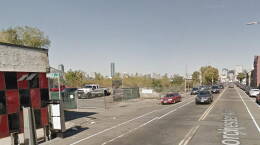
The Boston Society of Architects challenged four interdisciplinary design teams, led by Brian Healy FAIA, Eric Höweler AIA, Beth Whittaker AIA, and the BSA Emerging Professionals Network, to suggest new housing plans for a parcel in Dorchester, MA. The idea was to answer Boston Mayor Marty Walsh's call to create 53,000 new workforce housing units by 2030. The site, on Dorchester Avenue (between the Broadway and Andrew MBTA Red Line stops), is uninhabited, convenient to two T stations and large enough for fourt distinct projects. The designs each team presented answered a mulititude of questions, from how many parking spaces to work with, to lving in your work space, to community gardening programs that would provide extra elbow room to micro-unit dwellers. **See Part One**: [Urban Design in Dorchester](http://forum-network.org/lectures/housing-urban-design-discussion/ "")Partner:Boston Society of Architects/AIA and the BSA Foundation -
The Fife is Right: Literary Boston
Beantown bibliophiles unite! Whether your interest is Transcendental tales, American poetry, famed publishers, or the history of censorship that gave rise to the term “banned in Boston” – join us for an evening of spirited rivalry as you challenge your own knowledge of Boston’s literary past against two teams of local experts. In this fast-paced, live-action quiz show, the audience is part of the event, offering life-lines, voting on answers and more. This quiz show goes far beyond any trivia game, providing information with our answers so that you leave an expert! Contestants include: Barry DeVincke, Sharon Shaloo, Henry David Thoreau (portrayed by Richard Smith), L'Merchie Frazier, Louisa May Alcott (portrayed by Jan Turnquist), and Larry Lindner Quizmaster: Susan WilsonPartner:Revolutionary Spaces -

Iyad Burnat: Non-Violent Resistance In Palestine
**Iyad Burnat**, born in 1973 in Bil`in, Palestine, heads the Bil’in Popular Committee. Since 2005, citizens of Bil’in, joined by Israeli and international peace activists, have held weekly non-violent demonstrations against the Israeli separation wall and the encroachment of illegal settlements. The protesters have maintained a commitment to non-violent resistance in the face of armed military opposition. The demonstrations are the subject of the 2012 Oscar-nominated documentary film 5 _Broken Cameras_, which was made by Iyad’s brother, Emad Burnat. Burnat discusses strategies for non-violent popular resistance with social justice activist **Trina Jackson**. How has he brought potential adversaries to share his goal of peace and prosperity for all people? _Co-sponsored by Don and Jeannette McInnes and by Unitarian Universalists for Justice in the Middle East – Massachusetts Chapter; Alliance for a Secular and Democratic South Asia; Boston Coalition for Palestinian Rights; Jewish Voice for Peace – Boston; Jewish Women for Justice in Israel- Palestine; Palestinian House of New England; and United for Justice With Peace._ (Photo: [Palestine Solidarity Project](https://www.flickr.com/photos/palestineproject/6132937953/in/photolist-akWUMx-oyqttW-8zEHS-akWR2P-akZCus-akZFq9-86A7y8-87j6Wb-oAdMka-oBXQiv-ozW6De-a6o6XX-ofnsVE-5Tvj15-7VG5He-5TgNWP-oPdVFo-86D9Tm-86A67T-oyxUYE-ohvuFf-oSCpu-86A4Br-6rM8c-5Tm81E-65KCx6-4eyXB-oytHSB-cUYFUN-5TwDtJ-88KEYz-owJgBY-oroxcS-oru1iE-86A9jz-5TwDww-qJzaCh-86Ab1z-r23QTJ-r1YAZZ-5S3qAU-86A3Ar-86DdiE-86A1fe-86zYWZ-e6MFHq-e6G2zB-e6G2Ac-e6MFCu-e6MFob ""))Partner:Cambridge Forum -

The Taming of Democracy Promotion
When U.S. government democracy assistance was launched three decades ago, it fostered real change, as in Poland and Chile, by supporting dissidents. Since then, democracy promotion has grown into an international industry. But assistance from both the U.S. and other donors normally finances programs that are not in the least threatening to authoritarian regimes. Instead, it finances technical assistance programs that considerable evidence suggests are ineffective. Or, it focuses on quantitative outcomes, such as the number of women in parliament, on which it is easy to show success but that do not threaten autocratic governments. Professor Bush argues that these results fit the incentives for organizations that must have permission to operate in countries in order to be funded, and that must compete with each other for donor support. In short, the rise of a "Democracy Establishment" has "tamed" democracy promotion. Professor Bush's talk was based on the research for her new book with Cambridge University Press, _The Taming of Democracy Assistance: Why Democracy Promotion Does Not Confront Dictators_. Dr. Bush earned her Ph.D. in Political Science from Princeton University and was a Postdoctoral Fellow in the International Security Program of the Belfer Center for Science and International Affairs of Harvard's John F. Kennedy School of Government.Partner:Case Western Reserve University -
Housing and Urban Design in Dorchester
A new BSA Urban Design Workshop took place on March 30, exploring solutions to Mayor Walsh’s housing initiative. The evening included an introduction to the scope of and goals for the 3-day workshop, followed by a diverse panel discussion moderated by Renée Loth, editor of ArchitectureBoston magazine. The panel tackled issues of housing, the redevelopment of brownfield districts that still contain vital businesses, and other issues germane to the design challenge. The Housing Urban Design Workshop is the second in an ongoing series of urban design workshops that follow a similar format of a public panel discussion, closed-door professional team charrettes, and a public presentation of the teams’ ideas. This workshop applies the housing topic to sites along Dorchester Avenue (between the Broadway and Andrew MBTA Red Line stops). Four interdisciplinary design teams, led by Brian Healy FAIA, Eric Höweler AIA, Beth Whittaker AIA, and the BSA Emerging Professionals Network, will create innovative site proposals. Forthcoming workshop topics include the future of the workplace and the urban realm. **Part Two**: [Rethinking Boston's Housing Stock](http://forum-network.org/lectures/rethinking-bostons-housing-stock/ "")Partner:Boston Society of Architects/AIA and the BSA Foundation -

African Americans' Participation in the Environmental Movement
**Dr. Carolyn Finney** talks about her new book, _Black Faces, White Spaces: Reimagining the Relationship of African Americans to the Great Outdoors_. Her work bridges the fields of environmental history, cultural studies, critical race studies, and geography. She argues that the legacies of slavery, Jim Crow, and racial violence have shaped cultural understandings of the "great outdoors" and determined who should and can have access to natural spaces. Dr. Finney, whose love of environment was inspired by a backpacking trip around the world and numerous years living in Nepal, explores the relationship of African Americans to the environment and to the environmental movement. Drawing on “green” conversations with African descendants from coast to coast, she considers the power of resistance and resilience to the environmental and social challenges in our cities and beyond. Now an assistant professor in environmental science, policy and management at the University of California Berkeley, Dr. Finney also is a member of the U.S. National Parks Advisory Board. As such, she works with the National Park Service to respond to America’s changing demographics and diversify the ranks of visitors and employees.Partner:Museum of African American History -

Barney Frank, Partisan Democrat
How did a disheveled, intellectually combative gay Jew with a thick accent become one of the most effective (and funniest) politicians of our time? Growing up in Bayonne, New Jersey, the fourteen-year-old Barney Frank made two vital discoveries about himself: he was attracted to government, and to men. He resolved to make a career out of the first attraction and to keep the second a secret.Partner:Harvard Book Store