-

Lou Ureneck: The Great Fire
The year was 1922: American Asa Jennings had just arrived in the Turkish coastal city of Smyrna to teach sports to boys. Unknown to him, the Armenian Genocide was unfolding and the Turkish army was advancing on Smyrna, where a half a million refugees had fled in a desperate attempt to escape. Unwilling to leave with the other American civilians, Jennings commandeered a fleet of unoccupied Greek ships and was able to evacuate a quarter million innocent people—an amazing humanitarian act that has been lost to history, until now.Partner:GBH Forum Network -
Matthew Gilbert Reads from Off the Leash
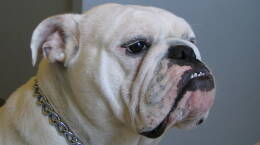
Come hear Matthew Gilbert talk about his work, and his time at the local dog park. Gilbert has written an utterly charming book about how his distaste for dogs morphed into love for his own dog, Toby, who taught him that it’s okay for life, relationships, to get intimate and messy. His new book is his homage to Toby, and even non-dog lovers will enjoy such descriptions as a pack of bulldogs running around like so many Winston Churchills, or two dogs of different colors play-fighting and looking for all the world like clothes seen spinning through the porthole of a dryer.
Photo: Wikimedia CommonsPartner:Boston Literary District -

Great Oratory and Famous Poems
Actors from the [Boston Poets Theatre](https://https://www.poetstheatre.org/boston-poets) present a bouquet of short excerpts from great oratory and famous poems — all echoing originals first delivered in the vicinity of Faneuil Hall and Quincy Market, the State House, the Boston Athenaeum, the Tremont Temple, and the Boston Public Library. The event honors Boston’s rich legacy of great orators and literary and political figures of great variety and distinction. ## The Program Ralph Waldo Emerson's Concord Hymn and "On John Brown" ready by Ben Evett John Hancock read by Steven Barkhimer Daniel Webster's speech at Bunker Hill Monument read by Bob Scanlan Frederick Douglass's "Fourth of July for the Negro" read by Shanae Burch William Lloyd Garrison's "Let the South Go" read by David Gullette Oliver Wendell Holmes' "The Chambered Nautilus" recited by Steven Barkhimer Ida B. Wells' "On Lynch Laws" read by Shanae Burch John F. Kennedy read by David Gullette Richard Wilbur read by Ben EvettPartner:Boston Literary District -

Jessica Fechtor: The Meals That Brought Me Home
**Jessica Fechtor**, writer of the popular food blog [Sweet Amandine](http://www.sweetamandine.com/ ""), meets with James Beard Award-winning journalist **Kathy Gunst** for a discussion of Fechtor's new memoir _Stir: My Broken Brain and the Meals That Brought Me Home._ At 28, Fechtor was happily immersed in graduate school and her young marriage, and thinking about starting a family. Then she went for a run and an aneurysm burst in her brain. She nearly died. She lost her sense of smell, the sight in her left eye, and was forced to the sidelines of the life she loved. Jessica’s journey to recovery began in the kitchen as soon as she was able to stand at the stovetop and stir. There, she drew strength from the restorative power of cooking and baking. Photo: www.sweetamandine.com/Partner:Harvard Book Store -

The Culinary Lives of John & Abigail Adams: A Cookbook
Rosana Wan speaks about her book The Culinary Lives of John & Abigail Adams: A Cookbook. Throughout their 54-year marriage, John and Abigail Adams enjoyed diverse cuisine in both Massachusetts and Europe. Raised with traditional New England palates, they feasted on cod, mince pie, and plum pudding. These recipes, as well as dishes from published cookbooks settlers brought from the Old World such as roast duck and Strawberry Fool, are included in this historical cookbook. Together or separate, at home or abroad, this extraordinary couple humbly experienced an international style of cookery that inspired modern American culinary culture.Partner:Boston Public Library -

Olmsted's Legacy: Landscape + the City
One hundred and thirty years after Frederick Law Olmsted's Emerald Necklace re-shaped our city, Boston 2024 has taken a fresh look at Boston’s public spaces—proposing new athletic facilities in several public parks and the completion of the Emerald Necklace as a part of the Olympic legacy. What are the possibilities for Boston’s public realm beyond 2024? What roles can landscape play in defining and activating the Boston of tomorrow? How can new environmental challenges, new forms of recreation and leisure, new technologies, and new ideas about public space and the public realm shape the contemporary city and the social spaces that make it work?Partner:Boston Society of Architects/AIA and the BSA Foundation -

Susan Wilson: The History of Omni Parker House
In March of 1877, humorist Mark Twain was staying at the Parker House in room 168. A reporter from the _Boston Globe_ entered Twain’s room, shuttled in by a porter. After a pause of several moments, Twain swiveled around in his large easy chair and faced his visitor. With a local newspaper in hand and puffing on a large cigar, he observed to the reporter, “You see for yourself that I’m pretty near heaven—not theologically, of course, but by the hotel standard.” Inspired by Twain, **Susan Wilson** named her anecdotal and lavishly illustrated new book on the history of the Omni Parker House _Heaven, By Hotel Standards_. Fascinating stories from that book make up her talk, including tales of the illustrious Saturday Club, which regularly drew to the hotel some of the greatest luminaries of the Golden Age of American Literature—like Ralph Waldo Emerson, Oliver Wendell Holmes, Henry Wadsworth Longfellow, Nathaniel Hawthorne, and John Greenleaf Whittier. (Photo: [Wikimedia Commons](https://en.wikipedia.org/wiki/Omni_Parker_House ""))Partner:Boston Literary District -

City by City: Dispatches from the American Metropolis
Edited by Keith Gessen and Stephen Squibb, City by City is a collection of essays—historical, personal, and somewhere in between—about the present and future of American cities. It sweeps from Gold Rush, Alaska, to Miami, Florida, encompassing cities large and small, growing and failing. These essays look closely at the forces—gentrification, underemployment, politics, culture, and crime—that shape urban life. They also tell the stories of citizens whose fortunes have risen or fallen with those of the cities they call home. A cross between Hunter S. Thompson, Studs Terkel, and the Great Depression-era WPA guides to each state in the Union, City by City carries this project of American storytelling up to the days of our own Great Recession.Partner:Harvard Book Store -

Understanding Coastal Ecosystems
Northeastern's Brian Helmuth shows us how marine scientists investigate the effects of climate change on seacoast species, including mussels and oysters. The Helmuth Lab is very committed to outreach designed for students and the general public, and its online resources include virtual reality tours to many areas around the world.Partner:Science for the Public -

The Nation: 150 Years Of Weekly News
This year marks the 150th anniversary of _The Nation_ magazine, which was founded by abolitionists just months after the assassination of Abraham Lincoln. **Katrina vanden Heuvel**, London correspondent **D.D. Guttenplan**, and Nation writer **Chloe Maxmin** will discuss Guttenplan's long-awaited book, _The Nation: A Biography_, which chronicles the surprising story behind America’s oldest weekly magazine—the bickering abolitionists who founded it; the campaigns, causes and controversies that shaped it; the rebels, mavericks and visionaries who have written, edited and fought in its pages for 150 years and counting.Partner:Harvard Book Store