-

Encore Entrepreneurs
Fred DeFinis offers a workshop tailored for the over-50 entrepreneur considering the life change of starting a business for the first time. The talk covers the basics of starting a business, the rewards and pitfalls of becoming an “encore entrepreneur", critical success factors for a new business, and resources available to help along the way. (Photo: [Pixabay](https://pixabay.com/en/businessmen-men-people-office-42691/ ""))Partner:Boston Public Library -

Race, Gender, and Political Leadership in 21st Century America
A distinguished panel will take up the topic of Carol Hardy-Fanta's new book, _Contested Transformation: Race, Gender, and Political Leadership in 21st Century America._ Joining the author is Boston City Council President Michelle Wu, City Councilor At Large Ayanna Pressley, Prof. Paul Watanabe, and Ann Bookman, Director of the Center for Women in Politics and Public Policy. Learn how gains in political leadership and influence by women and men of color holding elected office are transforming the American political landscape, but how they have taken place within a contested political context, one where struggles for racial and gender equality continue.Partner:UMass Boston -

Israeli Politics from Soup to Nuts
American voters may worry that they have only two parties from which to choose. Israelis do not have that problem. Depending on how you count, the current Knesset (parliament) includes members of at least ten parties, representing a wide range of cleavages within the country. As the number of parties hints, Israeli politics can be rather confusing. So the Center for Policy Studies is pleased to host Professor Nadav Shelef for an overview of the diversity and dynamics of Israel’s politics. There are so many questions involving so many cleavages, such as Jews vs. non-Jews; ethnic cleavages within the Jewish population; how new and more recent immigrants have been incorporated into political competition; the relative weight of economic issues as opposed to identity and security issues; and the role of religion. This lecture will explain how Israeli politics work and explore the ways in which Israel’s political institutions , especially the election rules and the party system, interact with the two main axes of Israeli politics – territory and identity – to produce the vibrant and turbulent character of the Israeli political sphere.Partner:Case Western Reserve University -

The Play’s the Thing: Shakespeare on Stage
Nicole Galland is an award-winning performer, screenwriter, and historical fiction writer. Her novels include I, Iago, a brilliant retelling of Shakespeare’s Othello. She co-founded and co-directs Shakespeare for the Masses, a project-based theatre on Martha’s Vineyard that has irreverently adapted more than 20 of Shakespeare’s plays by way of making the famous playwright more accessible to Bardophobes. Galland’s presentation will be part lecture, part performance in celebration of Shakespeare. (Photo: [MvTimes by Kelsey Perrett](http://www.mvtimes.com/2016/01/06/shakespeare-gets-a-shakeup/ ""))Partner:Boston Public Library -
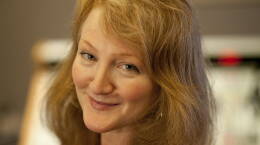
Krista Tippett: Becoming Wise
Krista Tippett, host of award-winning NPR program “On Being“, and poet David Whyte discusses several of the life-sized concepts addressed in Tippet's book, _Becoming Wise: an inquiry into the mystery and art of living._ In 2014, Tippett received the National Humanities Medal at the White House for ‘thoughtfully delving into the mysteries of human existence.’ Her radio program, On Being, “shines a light on the most extraordinary voices on the great questions of meaning for our time. Scientists in a variety of fields; theologians from an array of faiths; poets, activists, and many others have all opened themselves up to Tippett’s compassionate but searching conversation." Whyte has been a guest on her show. In _Becoming Wise_, Tippett distils the insights she has gleaned from years of luminous conversation into a coherent narrative journey, over time and from mind to mind, into what it means to be human. Critics say the book is “a master class in living, individually and collectively. Wisdom emerges through the raw materials of the every day.”Partner:Cambridge Forum -

Inequity, Wealth Disparities and Free Time
**All citizens are entitled to, in the words of early labor reformers, time "for what we will.”** Recent debates about inequality have focused almost exclusively on the distribution of wealth and disparities in income, but little notice has been paid to the distribution of free time. Free time is commonly assumed to be a matter of personal preference, a good that one chooses to have more or less of. Even if there is unequal access to free time, the cause and solution are presumed to lie with the resources of income and wealth. In her book _Free Time_, Julie Rose argues that these views are fundamentally mistaken. First, Rose contends that free time is a resource, like money, that one needs in order to pursue chosen ends. Further, realizing a just distribution of income and wealth is not sufficient to ensure a fair distribution of free time. Because of this, anyone concerned with distributive justice must attend to the distribution of free time. (Photo: Pixbay.com)Partner:Harvard Book Store -

BostonTalks: Sex and Our City
We’re looking at Boston’s sexual history and how it has — or has not — shaped the city we know today. Writer and dance scholar Jessica Berson sheds light on the business and history of erotic performance. Independent scholar Lori Stokes shares how the Puritans might not have been so pure after all. Professor and author Stephanie Schorow takes us back in time to downtown Boston's adult entertainment district known as the Combat Zone. And Stephanie Berman, inventor of the Semenette, explains how she is making history by revolutionizing the way babies are made. Photo: By [Sailko](http://creativecommons.org/licenses/by/3.0 "") (Own work) via Wikimedia CommonsPartner:WGBH -

Yuval Noah Harari presents Homo Deus: A Brief History of Tomorrow
Harvard Book Store welcomes the bestselling author of Sapiens Yuval Noah Harari for a discussion of his latest book, Homo Deus: A Brief History of Tomorrow. Harari will be joined in conversation by Harvard's Michael Sandel, author of Justice: What’s the Right Thing to Do? and What Money Can't Buy: The Moral Limits of Markets. This event is co-sponsored by the Petrie-Flom Center for Health Law Policy, Biotechnology, and Bioethics at Harvard Law School. About Homo Deus Yuval Noah Harari, author of the critically-acclaimed New York Times bestseller and international phenomenon Sapiens, returns with an equally original, compelling, and provocative book, turning his focus toward humanity’s future, and our quest to upgrade humans into gods. Over the past century humankind has managed to do the impossible and rein in famine, plague, and war. This may seem hard to accept, but, as Harari explains in his trademark style—thorough, yet riveting—famine, plague and war have been transformed from incomprehensible and uncontrollable forces of nature into manageable challenges. For the first time ever, more people die from eating too much than from eating too little; more people die from old age than from infectious diseases; and more people commit suicide than are killed by soldiers, terrorists and criminals put together. The average American is a thousand times more likely to die from binging at McDonalds than from being blown up by Al Qaeda. What then will replace famine, plague, and war at the top of the human agenda? As the self-made gods of planet earth, what destinies will we set ourselves, and which quests will we undertake? Homo Deus explores the projects, dreams and nightmares that will shape the twenty-first century—from overcoming death to creating artificial life. It asks the fundamental questions: Where do we go from here? And how will we protect this fragile world from our own destructive powers? This is the next stage of evolution. This is Homo Deus. With the same insight and clarity that made Sapiens an international hit and a New York Times bestseller, Harari maps out our future. Photo Credit: Flickr/[Vector Open Stock](https://www.flickr.com/photos/freevectorstock/14565770528 "")Partner:Harvard Book Store -

China in the Time of Trump
China has become the world’s second-largest economy and biggest trading nation. Much of its success has stemmed from friendly relations with the United States, where Republican and Democratic administrations alike saw the rise of a stable, prosperous China as serving the national interest. But things have changed. In the U.S., a Trump administration is likely to be less friendly. And in China, challenges are multiplying. The country is in a long-run growth slowdown, while trying to shift to a consumer-based economy and manage a rapidly aging population. Will China continue its rise towards superpower status, or fall victim to financial crisis? And will the U.S. and China find a modus vivendi in Asia, or start a new cold war? Arthur R. Kroeber, one of the world’s leading commentators on the Chinese economy and author of the recent book China’s Economy: What Everyone Needs to Know (Oxford, 2016), will provide insight into these crucial questions. Photo credit: [Wikimedia Commons](https://commons.wikimedia.org/wiki/File:FlagUSA_FlagPRC_crash.svg "")Partner:WorldBoston -

How Systems Biology Is Transforming Modern Medicine
_Systematic: How Systems Biology Is Transforming Modern Medicine_ is the first book to introduce general readers to systems biology, which is improving medical treatments and our understanding of living things. In traditional bottom-up biology, a biologist might spend years studying how a single protein works, but systems biology studies how networks of those proteins work together--how they promote health and how to remedy the situation when the system isn't functioning properly. Breakthroughs in systems biology became possible only when powerful computer technology enabled researchers to process massive amounts of data to study complete systems, and has led to progress in the study of gene regulation and inheritance, cancer drugs personalized to an individual's genetically unique tumor, insights into how the brain works, and the discovery that the bacteria and other microbes that live in the gut may drive malnutrition and obesity. Systems biology is allowing us to understand more complex phenomena than ever before. Thumbnail photo: [Walter K Schlage, Jurjen W Westra et al.](http://creativecommons.org/licenses/by-sa/4.0)) via Wikimedia CommonsPartner:Harvard Book Store